
From Bootstrapped MVP to a Connected Financial and Business Management Ecosystem
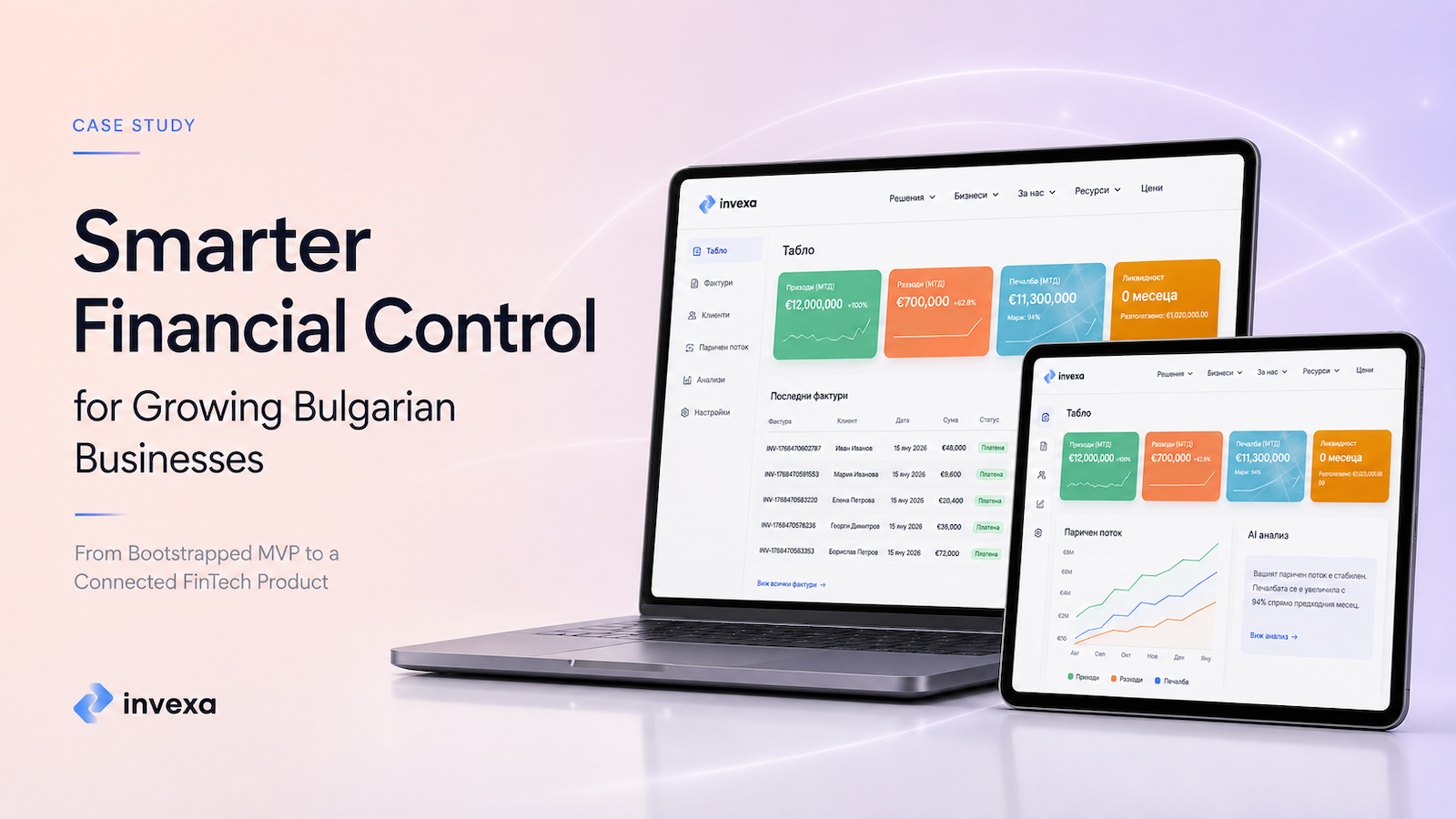

Running a small or growing company often requires business owners to assemble their own financial operating environment from multiple disconnected systems.
Invoicing software may handle sales documents but provide little visibility into banking. Bank platforms show transactions but do not explain which invoices or expenses those movements belong to. Forecasting often moves into spreadsheets. Documents are stored elsewhere. Project profitability, staff costs, and operational planning introduce additional layers of fragmented data.
Individual tools may solve individual problems.
The difficulty appears when a business needs to understand the relationship between them.
Invoices, bank accounts, expenses, documents, forecasts, projects, and operational data frequently exist in separate tools.
This fragmentation makes it harder to maintain a reliable picture of the business and creates repetitive administrative work when information needs to move manually between systems.
Knowing how much money is currently available is only one part of financial management.
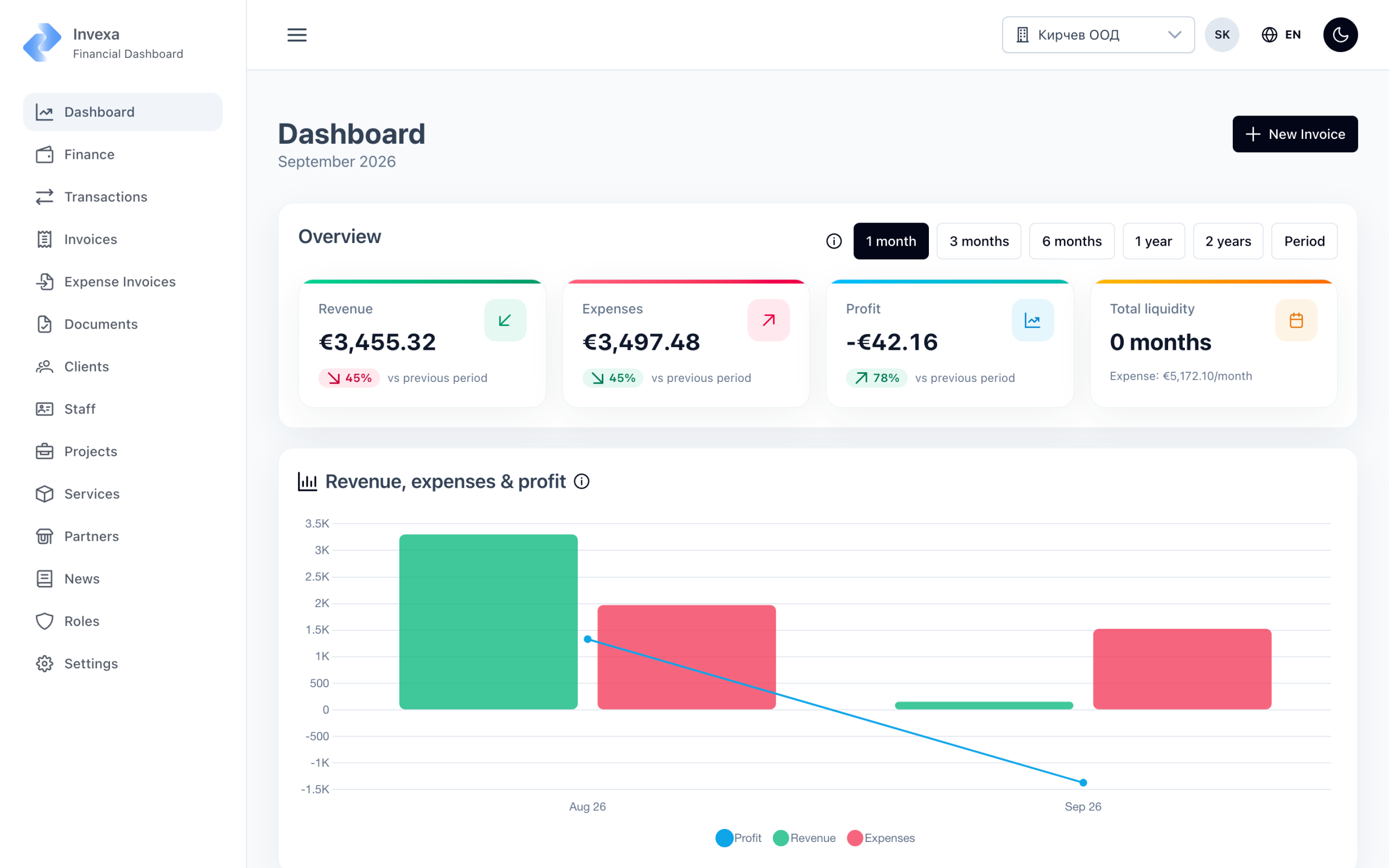
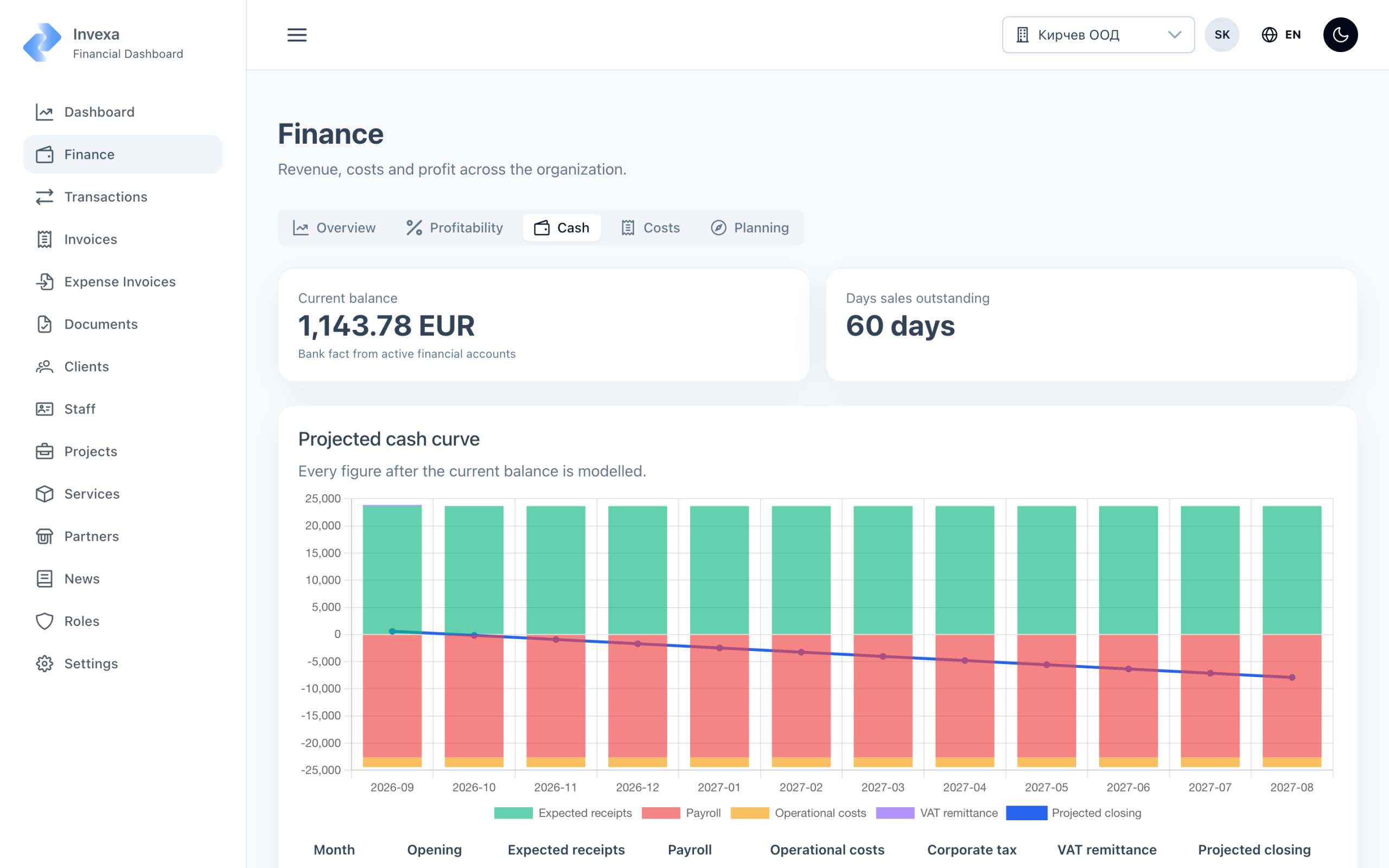
Growing businesses also need to understand expected income, upcoming costs, outstanding invoices, profitability, and how their financial position may change over future periods.
Without connected information, that view is difficult to build and maintain.
A bank transaction alone provides limited commercial context.
Businesses still need to understand whether a payment relates to a sales invoice, purchase invoice, expense, or another financial activity.
Connecting those records manually takes time and makes reconciliation more difficult as transaction volumes increase.
Recurring invoices, purchase documents, payment tracking, expense records, document organisation, and reporting may initially be manageable manually.
As the company grows, the same workflows become increasingly repetitive.
The opportunity was therefore not simply to digitise individual processes, but to connect and automate them wherever practical.
Business finances are rarely managed by one person indefinitely.
Employees, managers, accountants, and other collaborators may require different levels of access to financial and operational information.
A useful business platform therefore needs structured permissions and shared context without sacrificing organisational boundaries or data security.
Financial performance does not exist independently from the way a company operates.
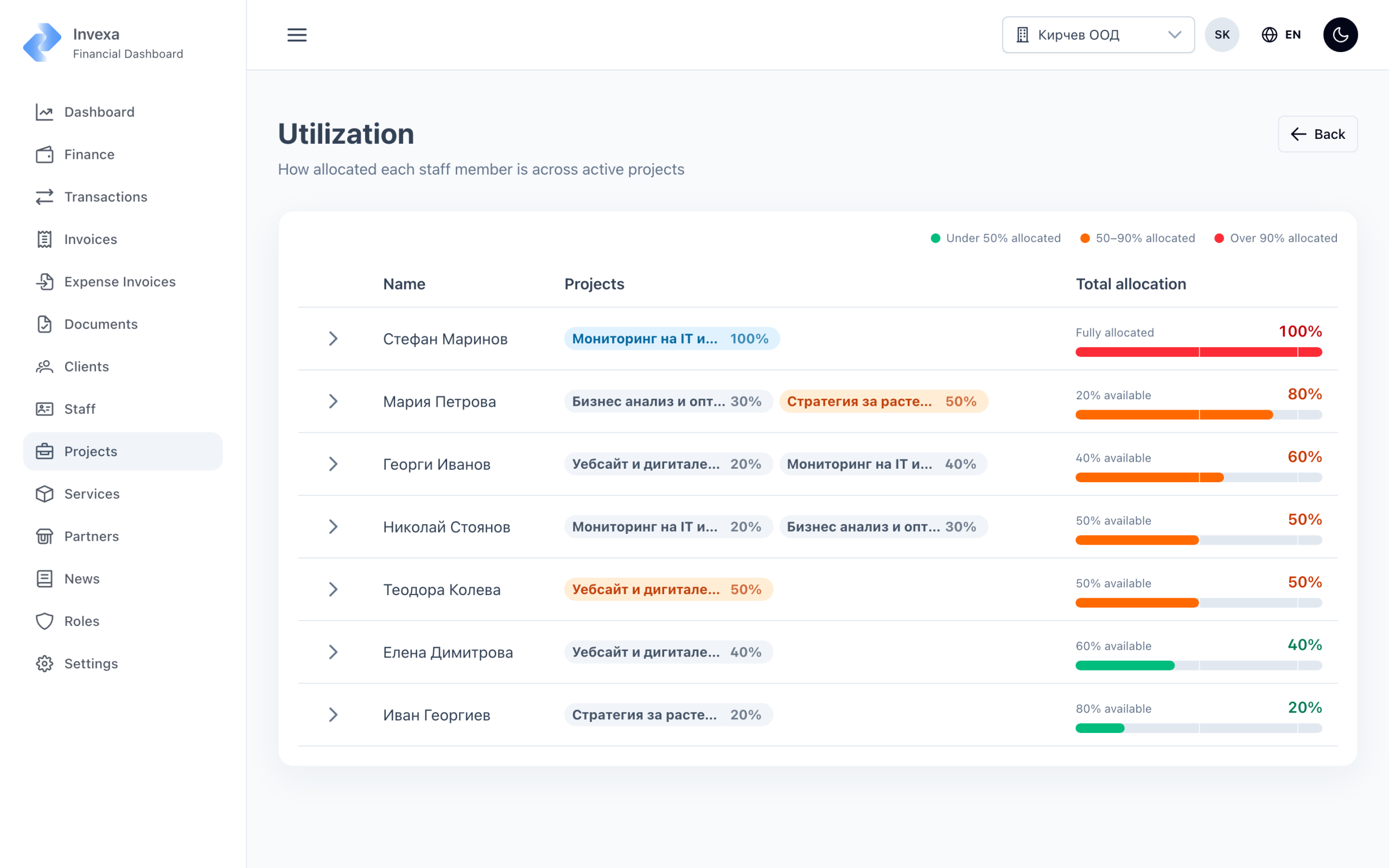
Projects, employees, compensation, utilisation, operating costs, and commercial activity all influence profitability.
EVLabs saw an opportunity to create a platform where these relationships could increasingly be understood within the same product rather than through disconnected spreadsheets and applications.
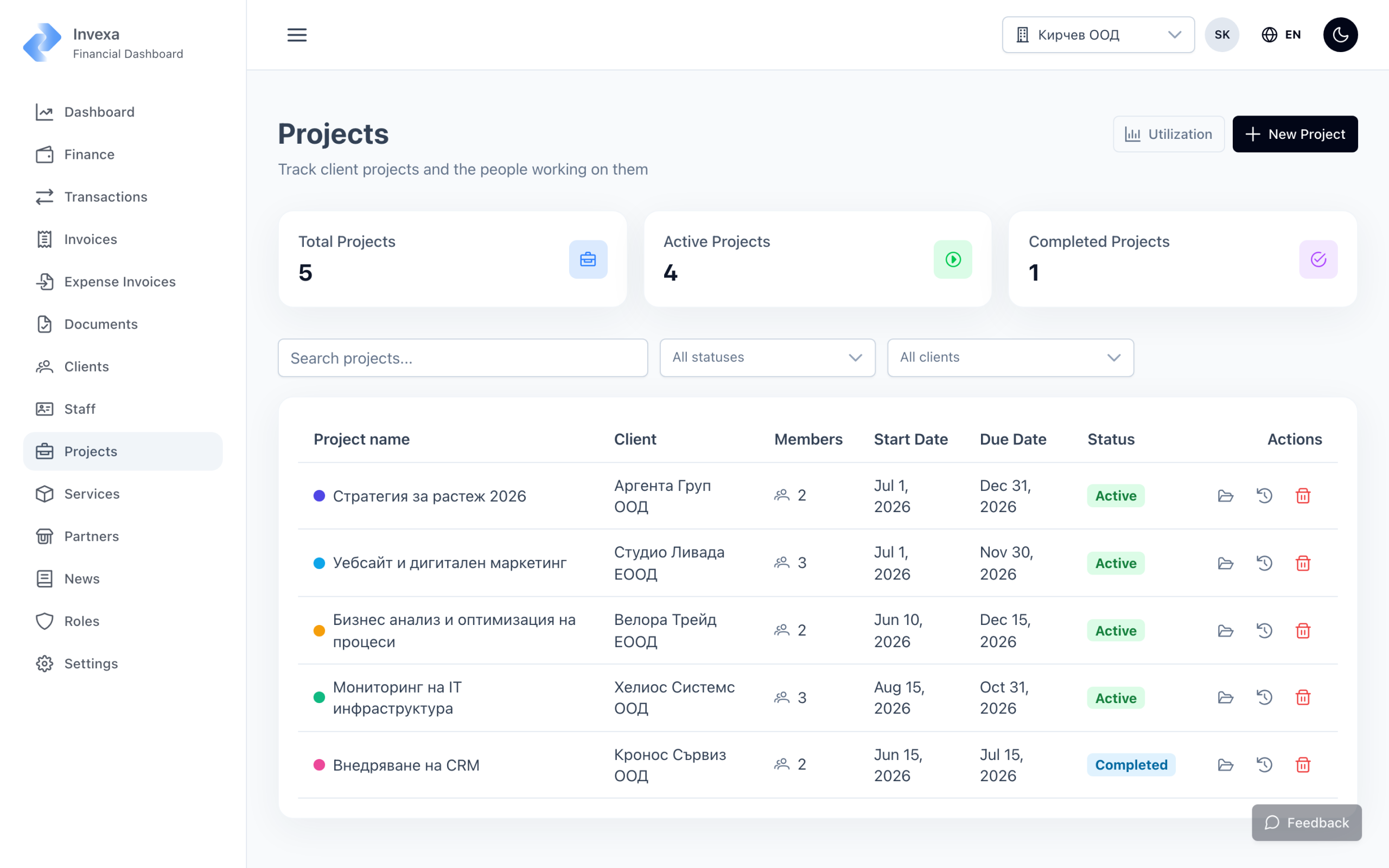
Invexa brings everyday financial and operational workflows into a single browser-based environment built around the way smaller businesses actually work.
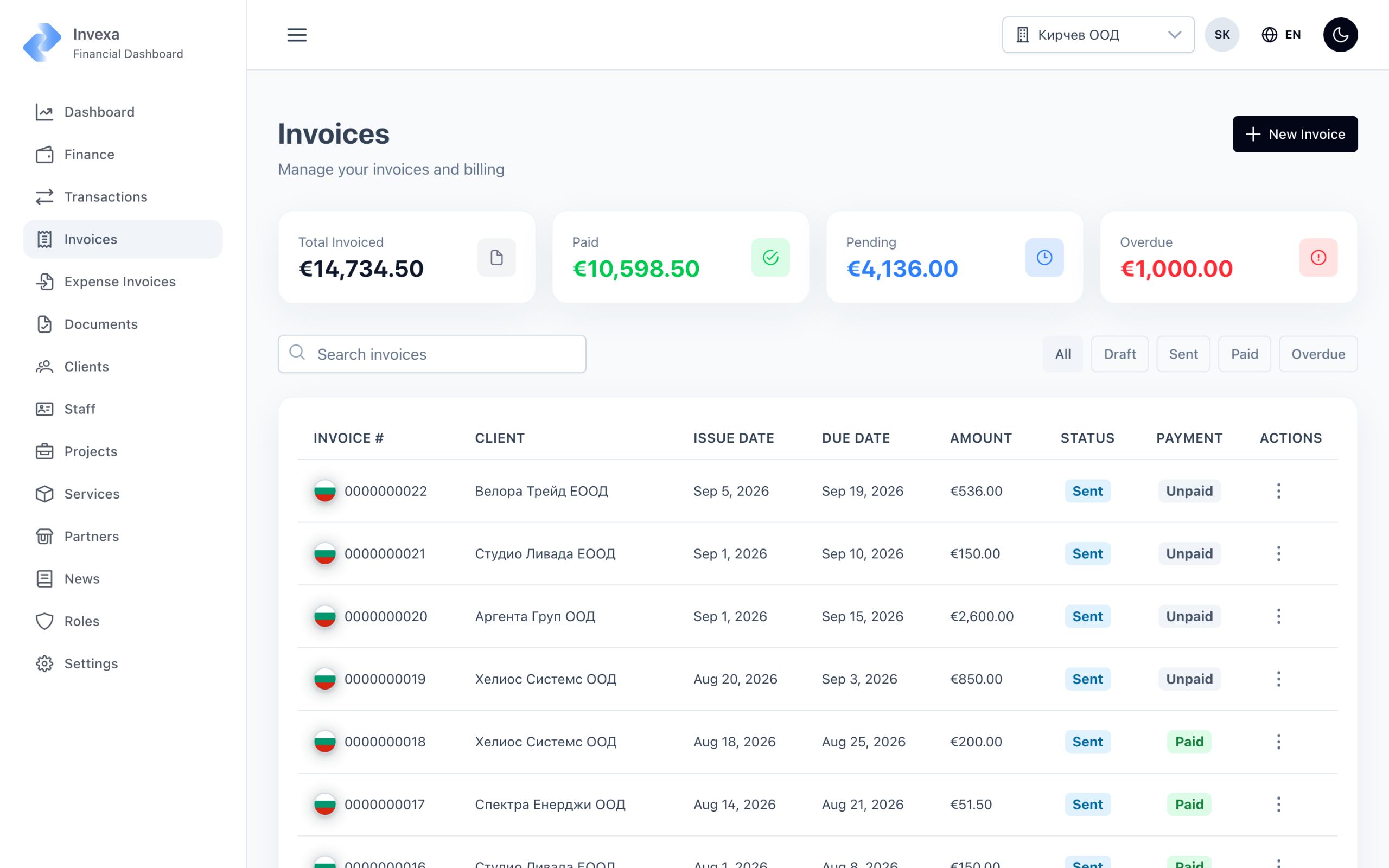
The experience begins with fundamental business management: organisations, clients, services, invoices, payments, expenses, and financial visibility.
From there, the platform connects banking activity, purchase documentation, cash planning, profitability, projects, employees, documents, and collaboration.
Users can manage:
AI-assisted document processing reduces another layer of repetitive work.
Receipts and purchase invoices can be processed using Azure AI Document Intelligence, with extracted information prepared as a reviewable draft. Users remain in control of the financial record and confirm the information before it becomes part of the organisation’s data.
Rather than treating these capabilities as isolated modules, Invexa connects them around a shared financial context.
The goal is straightforward: give business owners a clearer understanding of where their company has been, where it stands today, and where its finances are heading.
EVLabs approached Invexa as a long-term product rather than a collection of accounting utilities.
That meant balancing speed to market with a foundation capable of supporting substantially broader functionality as the product evolved.
The first objective was not to build every planned capability.
It was to identify the smallest coherent product that businesses could meaningfully use.
Within approximately 2-3 months, EVLabs established the initial product around:
The MVP established a usable financial-management workflow while creating the architectural foundation required for further development.
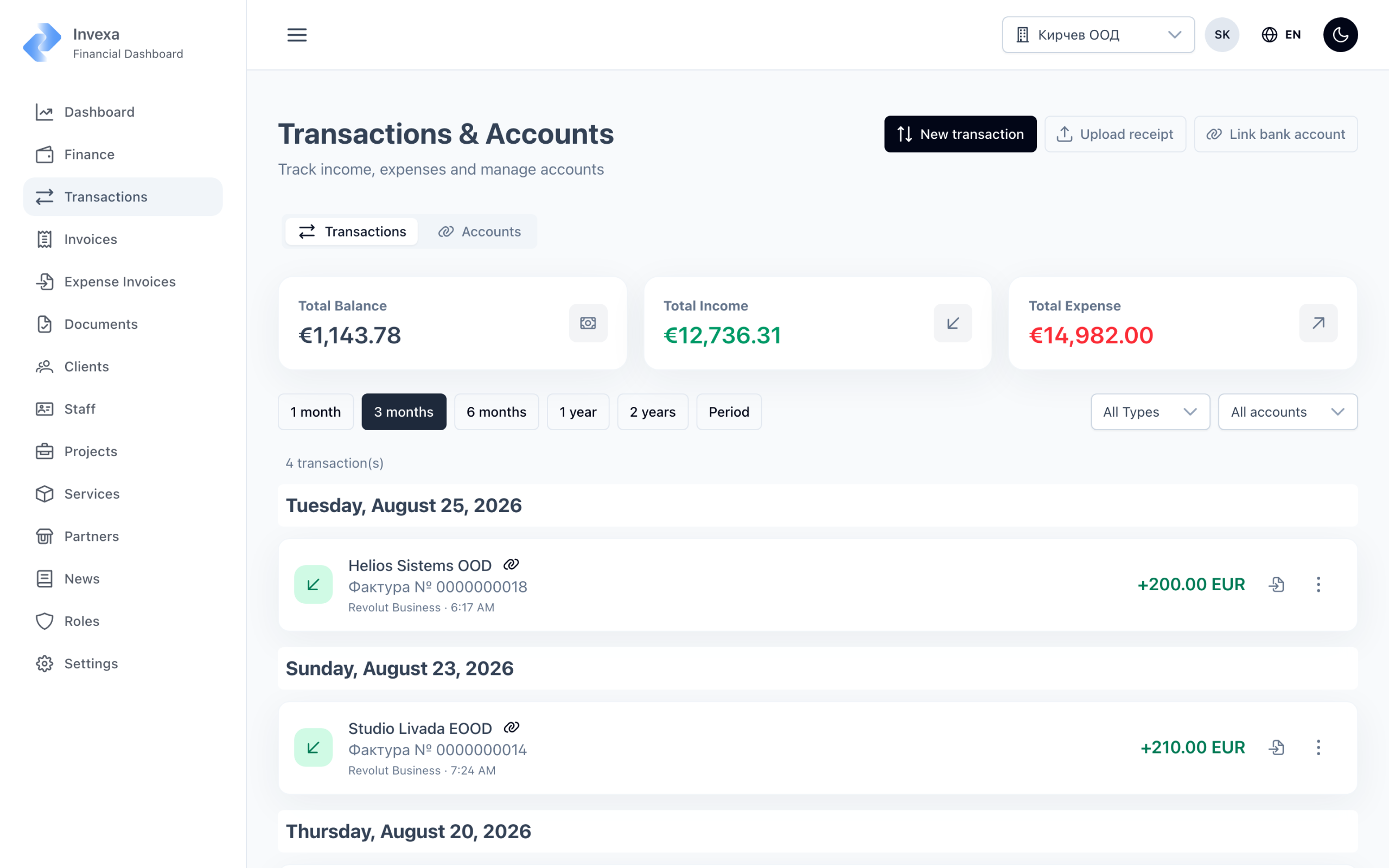
To move beyond traditional invoicing software, Invexa needed to connect commercial documents with actual money movements.
The platform introduced support for multiple cash and bank accounts together with IRIS open-banking connectivity, allowing banking data to become part of the same financial environment.
Synchronized and manually entered transactions can be managed alongside invoices and purchase documents, while settlement allocations help establish the relationship between payments and the financial records they represent.
Multi-currency support and external exchange-rate data through Fixer extend the model for businesses operating across different currencies.
Invexa covers both sides of everyday business finance.
Sales functionality includes invoice creation, scheduled and recurring invoicing, document generation, delivery workflows, and payment states.
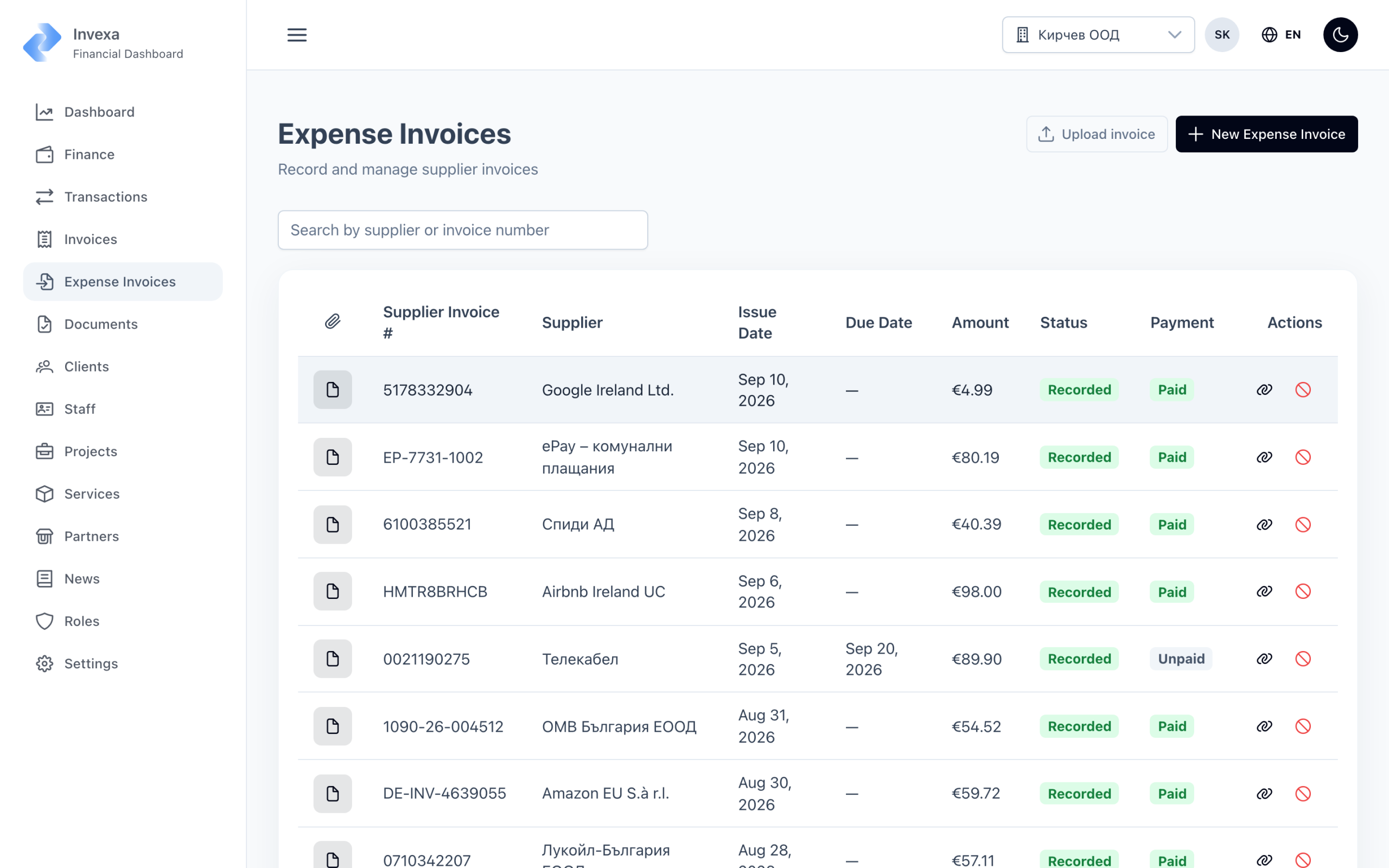
Purchase invoices and expenses bring outgoing financial activity into the same environment.
By connecting sales documents, purchase documents, transactions, and settlements, the product creates a much richer financial picture than any one of these records could provide independently.
Business owners need more than historical bookkeeping.
Invexa therefore evolved to include forward-looking financial capabilities covering:
This extends the product from documenting what has already happened toward understanding what may happen next.
Manual entry of purchase invoices and receipts is a repetitive part of everyday financial administration.
Invexa integrates Azure AI Document Intelligence to assist with document capture.
Relevant information can be extracted from uploaded financial documents and converted into a structured draft for review.
Importantly, the workflow remains user-controlled: extracted information is reviewed before a financial record is confirmed.
The result is automation where it is useful without removing human oversight from financial data.
For agencies, software companies, and other service businesses, project and people costs are closely connected to overall profitability.
Invexa therefore extends financial management into operational context through capabilities for:
Bringing these areas into the wider product creates the foundation for understanding company finances together with the operational activity behind them.
Financial and operational records frequently depend on supporting documents that are otherwise stored separately.
Invexa includes a secure document library where files can be organised in the context in which they matter — including by organisation, client, project, or staff member.
This helps keep financial data and its supporting documentation connected rather than creating another detached archive.
Invexa was designed from the beginning as a multi-tenant platform rather than a single-company application.
Organisation boundaries, invitations, role-based permissions, audit history, and controlled access allow teams and accountants to collaborate within the same environment while maintaining appropriate separation between organisations and responsibilities.
The platform combines an Angular 20 frontend with a .NET 9 backend structured around Clean Architecture, CQRS, and domain-driven design principles.
AWS services support authentication, data storage, documents, asynchronous processing, infrastructure, and deployment requirements.
Infrastructure is managed through Terraform, with Docker-based deployment and automated pipelines supporting consistent staging and production environments.
This allows product capabilities to expand without requiring the underlying system to be replaced each time the scope grows.
Creating a proprietary SaaS product also requires the ability to understand and operate it effectively.
EVLabs developed first-party, privacy-conscious product analytics together with a separate internal operator portal built with Next.js.
These capabilities support cross-organisation administration, product usage visibility, customer support, and informed product development.
Observability through OpenTelemetry, Serilog, and Seq further improves visibility into system behaviour and operational health.
Invexa extends beyond the application itself.
EVLabs also designed and developed invexa.bg in Webflow, keeping the product experience, public brand presence, acquisition website, engineering, and product operations within the same organisation.
This creates a direct relationship between how the product is conceived, how it is built, and how it is presented to the market.
Building an internal product required EVLabs to operate differently from a conventional project delivery engagement.
There was no external specification to implement and no client organisation defining the roadmap.
The team had to continuously combine product thinking, user experience, engineering, architecture, quality, infrastructure, and commercial priorities into one development process.
The starting point was the fragmentation surrounding financial management in small and growing businesses. Rather than attempting to replace every specialist business system immediately, EVLabs focused on the workflows that could create a meaningful connected financial foundation. Invoicing, organisations, clients, payments, and financial visibility became the starting point.
The initial roadmap prioritised complete workflows over feature volume. Registration, organisation setup, clients, services, sales invoicing, payment tracking, collaboration, and financial visibility were developed together so that the first version could function as an actual product rather than a technical prototype. This allowed Invexa to reach MVP form within approximately 2-3 months.
Speed was important, but the architecture could not assume that Invexa would remain a simple invoicing application. Frontend, backend, tenancy, authentication, permissions, data structures, cloud infrastructure, and deployment processes were therefore designed with continued product expansion in mind. This allowed banking, purchases, reconciliation, planning, projects, staff operations, documents, and AI-assisted workflows to be added without rebuilding the platform from scratch.
Each major product expansion was evaluated in relation to the financial information already present within Invexa. Bank transactions became more valuable when linked to invoices. Documents became more useful when associated with the organisation, client, project, or employee they concern. Projects and staff information became more meaningful when considered alongside profitability and operating costs. This connected model gradually transformed Invexa from an invoicing product into a broader financial operating environment.
Automation was introduced where it could reduce unnecessary administrative effort. Recurring invoices reduce repeated document creation. Banking integrations reduce manual transaction handling. AI-assisted extraction reduces repetitive document entry. At the same time, important financial workflows retain explicit user control, particularly where automatically extracted information could affect business records.
As Invexa became more comprehensive, EVLabs also developed the capabilities necessary to operate the product itself. Automated deployments, observability, health checks, structured logging, testing, first-party analytics, auditability, and an internal operator portal became part of the platform's operating model. This gives the product team the technical visibility required to support and evolve Invexa over time.
A step-by-step overview of the key milestones, challenges, and progress throughout the project.
The first phase focused on establishing a complete, usable financial-management workflow.
EVLabs developed authentication and onboarding, organisation workspaces, clients, services, role-based collaboration, sales invoicing, PDF and email workflows, payment tracking, and essential financial visibility.
The first usable MVP was established within approximately 2-3 months.
With the invoicing foundation in place, development expanded into the movement of money around those records.
Multiple accounts, open-banking connectivity, synchronized and manual transactions, purchase invoices, expenses, multi-currency support, settlement allocation, recurring invoicing, permissions, accountant collaboration, and audit history broadened the platform’s financial capabilities.
Invexa then expanded beyond transactional finance.
Cash projections, P&L visibility, profitability, revenue forecasting, operating and staff costs, growth scenarios, payroll configuration, projects, allocation, utilisation, compensation, leave, time entries, and document management created a wider business-management layer.
AI-assisted document capture added automation around purchase invoices and receipts while retaining a review-and-confirm workflow.
As the application matured, EVLabs strengthened both the technical platform and the operating model around it.
Staging and production environments were formalised through infrastructure as code, automated deployment pipelines, logging, observability, health monitoring, tenant controls, automated testing, and background-processing workflows.
First-party usage analytics and an internal operator portal were introduced to give EVLabs greater visibility across the SaaS environment.
Within approximately 6-8 months, Invexa had evolved from its original MVP into a significantly broader financial and business operations product.
The first phase focused on establishing a complete, usable financial-management workflow.
EVLabs developed authentication and onboarding, organisation workspaces, clients, services, role-based collaboration, sales invoicing, PDF and email workflows, payment tracking, and essential financial visibility.
The first usable MVP was established within approximately 2-3 months.
With the invoicing foundation in place, development expanded into the movement of money around those records.
Multiple accounts, open-banking connectivity, synchronized and manual transactions, purchase invoices, expenses, multi-currency support, settlement allocation, recurring invoicing, permissions, accountant collaboration, and audit history broadened the platform’s financial capabilities.
Invexa then expanded beyond transactional finance.
Cash projections, P&L visibility, profitability, revenue forecasting, operating and staff costs, growth scenarios, payroll configuration, projects, allocation, utilisation, compensation, leave, time entries, and document management created a wider business-management layer.
AI-assisted document capture added automation around purchase invoices and receipts while retaining a review-and-confirm workflow.
As the application matured, EVLabs strengthened both the technical platform and the operating model around it.
Staging and production environments were formalised through infrastructure as code, automated deployment pipelines, logging, observability, health monitoring, tenant controls, automated testing, and background-processing workflows.
First-party usage analytics and an internal operator portal were introduced to give EVLabs greater visibility across the SaaS environment.
Within approximately 6-8 months, Invexa had evolved from its original MVP into a significantly broader financial and business operations product.
Building Product Value Without External Funding or a Disposable MVP
Angular 20 TypeScript PrimeNG Tailwind CSS NgRx Signal Store NGX-Translate
.NET 9 ASP.NET Core Minimal APIs Clean Architecture CQRS Domain-Driven Design SignalR
AWS Cognito AWS DynamoDB AWS S3 AWS SQS AWS EC2 AWS IAM Terraform Docker nginx
IRIS Open Banking Fixer Azure AI Document Intelligence Customer.io Mailgun
OpenTelemetry Serilog Seq xUnit pytest Jasmine Playwright Bitbucket Pipelines
Next.js Internal Operator Portal First-Party Usage Analytics
Webflow
Invexa has been developed by a dynamic cross-functional EVLabs team rather than a fixed project squad.
The composition has evolved alongside the product roadmap, bringing together the relevant expertise across:
This flexible model allowed EVLabs to adapt the team as Invexa moved from initial product definition and MVP development into integrations, financial planning, AI-assisted workflows, operational capabilities, and continued product evolution.
Invexa represents a different side of EVLabs’ engineering capability.
There was no external client brief to implement and no predefined product waiting to be built.
EVLabs identified the opportunity, shaped the proposition, defined the product roadmap, designed the experience, established the architecture, built the software and cloud environment, and continues to own and operate the platform.
The result is more than an internally developed application.
It demonstrates the ability to take a business problem from opportunity identification and product strategy through UX, engineering, infrastructure, quality assurance, and real product operation.
Invexa continues that journey with a clear objective: to make financial management more connected, understandable, and useful for the businesses it is designed to serve.