
Turning a Therapist-Led Idea into a Live SaaS Product in Seven Weeks

Mental health practitioners rely on a wide range of therapeutic methods, but accessing relevant techniques in a structured and convenient format can be difficult.
Anima Tools set out to address this challenge with a subscription platform created by therapists, for therapists. The product gives licensed practitioners secure, online access to a curated library of therapeutic techniques organized around their professional focus, including work with children and adults.
The founders had a clear understanding of the audience and the value the platform could provide. What they needed was a technology partner capable of turning that vision into a functioning subscription business without slowing the project down through excessive planning.
EVLabs joined the project as a hands-on product and engineering partner. Within approximately seven weeks, we helped move Anima Tools from an early concept to a production-ready platform where therapists could register, select a subscription, manage billing, and access the technique library from anywhere.
Our contribution extended beyond software development. Drawing on previous subscription-product experience, we also helped the client navigate the practical decisions involved in launching a SaaS business for the first time – from plan structure and onboarding to customer emails and the everyday experience of a paying subscriber.
The platform was also enhanced with an AI-powered support agent designed to help users navigate and discover relevant therapeutic techniques more efficiently. Rather than relying on a generic AI implementation, the solution was adapted specifically to Anima Tools and its structured library of professional content.
Anima Tools entered the project with a strong product concept and deep knowledge of its professional audience. However, transforming that concept into a live subscription platform required decisions across product design, engineering, billing, communication, and user experience.
The client needed more than a team that could implement a predefined specification. They needed a partner that could move forward while parts of the product were still taking shape, identify unanswered questions, and help define the practical foundations of the subscription experience.
The platform needed to reach the market quickly, but not every feature, workflow, or business rule had been documented in advance.
Waiting for a complete specification would have delayed validation and made it harder for the client to assess the product in a realistic setting. The team needed an approach that allowed the platform to evolve through working software rather than lengthy planning documents.
As a first-time subscription business, the client had not yet finalized how plans should be organized and presented.
The platform needed to account for both the practitioner’s area of specialization – working with children or adults – and the selected billing period. These choices had to be reflected clearly across registration, purchasing, access, and account management.
The experience of a new customer involves more than completing a payment.
The client needed guidance on what should happen before and after subscription, including how users are welcomed, how billing information is communicated, how onboarding is structured, and how practitioners understand the value of the product from their first interaction.
A self-service subscription platform requires dependable payment and account-management processes.
Therapists needed a straightforward way to subscribe and manage their billing, while the client needed a foundation for handling common subscription events such as renewals and payment issues.
Although the platform does not function as a clinical record system, it serves professionals working close to sensitive client matters.
This made secure account access, reliable infrastructure, and clear communication important parts of the overall product experience. The platform needed to feel credible and trustworthy from the moment a practitioner registered.
Going live was not the end of the engagement.
Because the product was entering real use for the first time, the team needed to remain responsive to launch feedback and operational issues. Problems affecting new subscriber access had to be identified and resolved immediately.
The resulting product provides therapists with a focused, subscription-based environment for discovering and using professional therapeutic techniques.
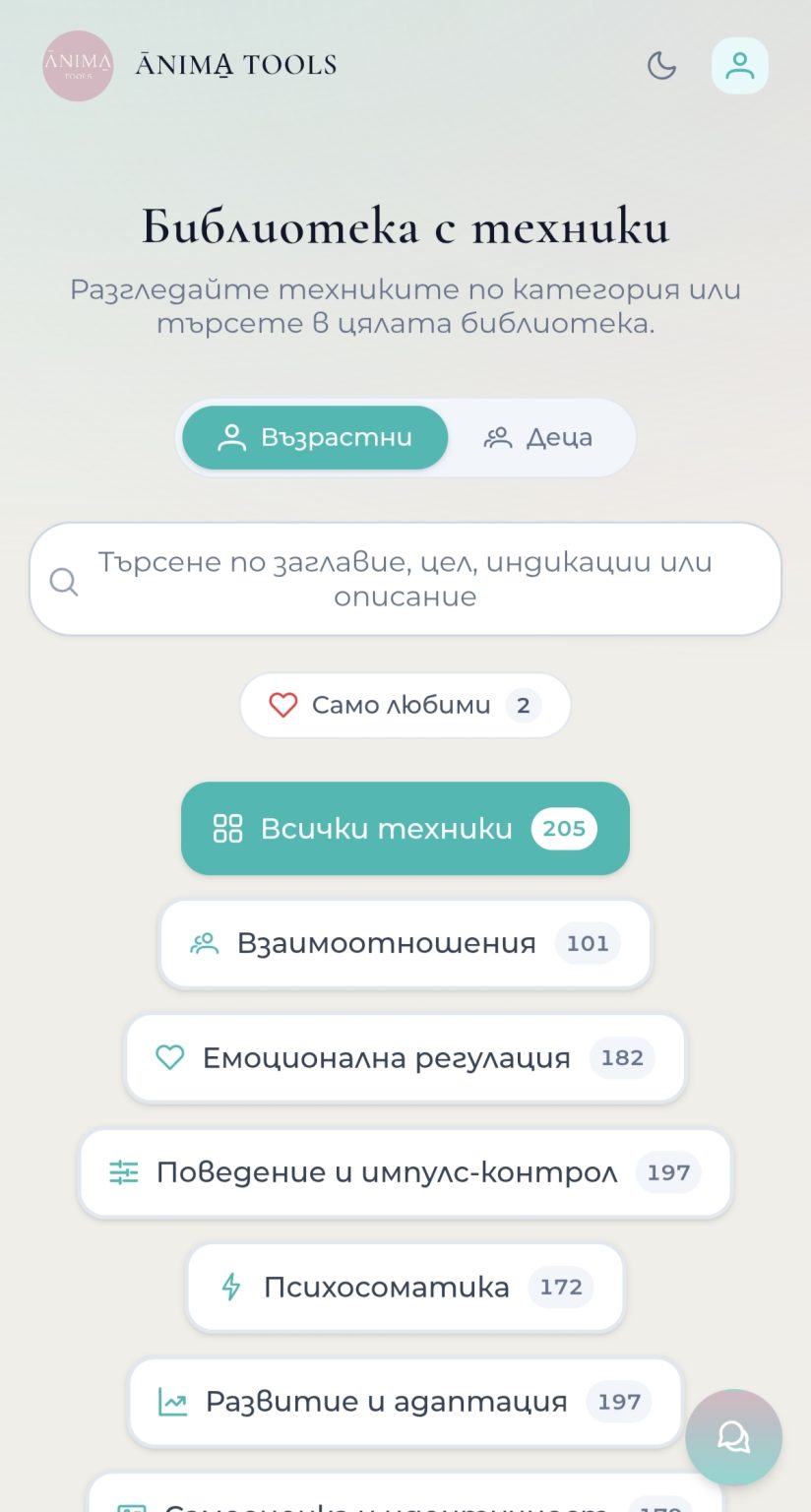
Practitioners can access the platform securely from different locations and browse resources relevant to their area of work. The library is structured around key specializations, including techniques for professionals working with children and those working with adults.
The experience was designed around the core needs of a subscription product:
Rather than attempting to launch with a large and complex feature set, the first version focused on making the central proposition work well: enabling therapists to subscribe and gain reliable access to a curated professional resource library.
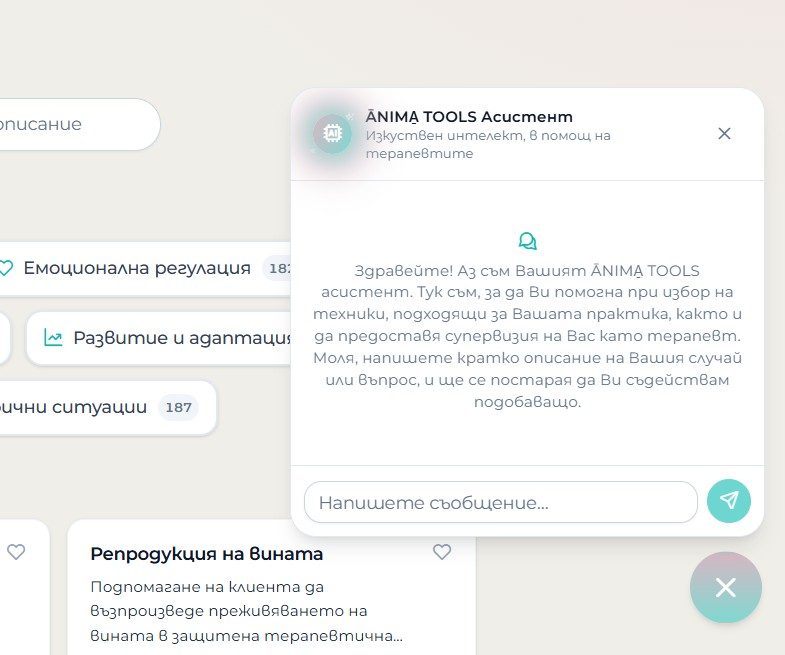
The AI support agent complements that experience by allowing users to interact with the platform’s existing technique library conversationally. When a practitioner submits a prompt, the system identifies the techniques most relevant to the request and provides them as context for the AI-generated response.
We developed a lean SaaS platform that combined subscription management, secure practitioner access, structured therapeutic content, and production-ready cloud infrastructure.
The platform was further extended with an AI support agent built around the client’s own therapeutic content, adding an intelligent layer for discovering and interacting with the technique library.
The solution was deliberately shaped around speed, usability, and the realities of launching a new subscription business.
The initial scope was reduced to the smallest complete product that therapists could genuinely use.
Instead of building speculative functionality, we concentrated on the essential journey:
This gave the client a real product to review and refine early in the engagement. Decisions could be made based on an interactive platform rather than assumptions contained in a specification.
The core product provides a curated collection of therapeutic techniques for licensed practitioners.
Resources are organized according to the therapist’s professional focus, particularly whether they work with children or adults. This structure helps users reach the most relevant material without navigating an unnecessarily broad or generic content library.
An AI support agent was integrated directly into the Anima Tools application to help practitioners find relevant techniques through natural-language queries.
Using a retrieval-augmented generation (RAG) architecture, the system searches the platform’s therapeutic content and retrieves only the techniques most relevant to each request.
This keeps the AI grounded in Anima Tools’ own content while reducing unnecessary processing and making each interaction more efficient.
Stripe was integrated to support the commercial foundation of the platform.
The billing experience allows practitioners to subscribe based on the available plan structure and billing period. It also gives the product a reliable base for common subscription processes, including recurring payments and self-service billing interactions.
We helped the client think through the communication that surrounds the product experience.
This included guidance on transactional and marketing email templates, such as:
The objective was not simply to send system notifications, but to make each message clear, useful, and consistent with what a new subscriber needs at that point in the relationship.
Alongside development, we advised the client on how the subscription offer could be structured and communicated.
This covered the relationship between plans, practitioner specialization, and billing periods, as well as how the offer would appear from the perspective of someone considering a paid subscription for the first time.
By addressing these questions during the build, the client could make important commercial and user-experience decisions before they became difficult to change.
The application was deployed using AWS infrastructure and containerized services.
The environment included:
This gave the platform a structured deployment process and a reliable technical foundation for production use.
After the production release, the team remained closely involved instead of treating launch as a handover point.
When a configuration issue appeared that could have prevented new members from receiving access, it was corrected within the same day. This responsiveness helped protect the initial subscriber experience during a particularly important stage of the product’s rollout.
EVLabs used a pragmatic product-development approach designed for an early-stage business that needed to learn quickly while continuing to make progress.
We began by translating the client’s product vision into a focused subscriber journey. Rather than attempting to define every future capability, we identified the minimum set of functions required for therapists to register, subscribe, and use the resource library successfully. This established a clear boundary for the first release while preserving room for the product to evolve.
The engineering team developed the platform using short feedback cycles. Working versions were made available early so that the client could review real user flows, clarify product decisions, and adjust priorities while development was still underway. This reduced the risk of investing time in assumptions that had not yet been validated.
As the platform took shape, we reviewed it from the perspective of a first-time subscriber. This included examining how plans were described, what information appeared during onboarding, how billing interactions felt, and what messages users would receive at important points in the subscription lifecycle. The team proactively raised questions that had not yet been included in the original product brief.
The AI support agent was designed around the therapeutic content already available inside Anima Tools. Each technique was embedded into a vector representation, creating a searchable semantic layer across the library. For every user prompt, the system retrieves only the most relevant techniques and supplies them to the AI agent as context. This RAG-based architecture allowed the chatbot to work with the platform's own knowledge while avoiding the need to process the entire content library for every interaction.
The platform was prepared for release on its production domain using AWS, Docker, nginx, and automated CI/CD processes. The goal was to ensure that the product was not simply functionally complete, but ready to support real subscriber activity and operational communication.
Following go-live, we stayed close to the product’s early use. Issues and feedback were addressed quickly, including a same-day configuration correction related to member access. This allowed the client to enter the market with active engineering support during the platform’s most sensitive operational period.
A step-by-step overview of the key milestones, challenges, and progress throughout the project.
The first stage focused on defining the lean MVP and establishing the application’s technical foundation.
The team clarified the core user journey, subscription structure, practitioner specializations, and essential access requirements. Backend, frontend, database, billing, and infrastructure components were prepared around this focused scope.
The central platform experience was developed during this phase.
The team implemented practitioner accounts, the therapeutic technique library, specialization-based access, Stripe subscription flows, and the primary user experience across the application.
Working versions of the platform gave the client an opportunity to review the product and refine decisions while development continued.
The platform’s AI capabilities were also developed around the existing technique library, using vector embeddings and retrieval-augmented generation to connect user prompts with the most relevant therapeutic content.
The final stage concentrated on the broader subscriber experience and production readiness.
This included email and onboarding considerations, deployment workflows, cloud infrastructure, production configuration, and the launch of the platform on its live domain.
After release, the team continued responding to feedback and operational issues to support a stable transition into real-world use.
Measurable impact across product delivery, subscriber experience, and platform operations
Hear from the people behind our partnerships

Child Psychologist, Trainer and Lecturer
Co-author of ĀNIMA Tools

EVLabs did an outstanding job bringing ĀNIMA Tools to life. From the very beginning, the team demonstrated a strong understanding of our vision, while also building on it with excellent technical solutions and expertise.
What stood out throughout the process was their experience, responsiveness, and clear focus on delivering the best possible result. Their dedication and attention to detail made the entire collaboration feel seamless and ensured that every stage of the project moved forward with confidence.
The final result exceeded our expectations, and it has been a pleasure working with a team that combines technical expertise with such a thoughtful and results-driven approach. We would not hesitate to work with EVLabs again.
Angular PrimeNG
.NET ASP.NET Core
PostgreSQL
Stripe
AWS EC2 AWS ECR AWS SES Docker nginx
Mistral AI Retrieval-Augmented Generation (RAG) Vector Embeddings Bitbucket CI/CD