
From a Simple Pickup-Game Problem to a Multi-Platform Community Product

From a Simple Pickup-Game Problem to a Multi-Platform Community Product
Finding people to play sports with should be simple.
In practice, amateur games are often organised through scattered group chats, personal networks, and one person repeatedly asking who is available. A game can still fall apart when someone cancels shortly before it starts. For people who are new to a city, have lost their regular sports group, or simply want to play more often, finding the right people can be difficult.
EVLabs saw an opportunity to create a better way.
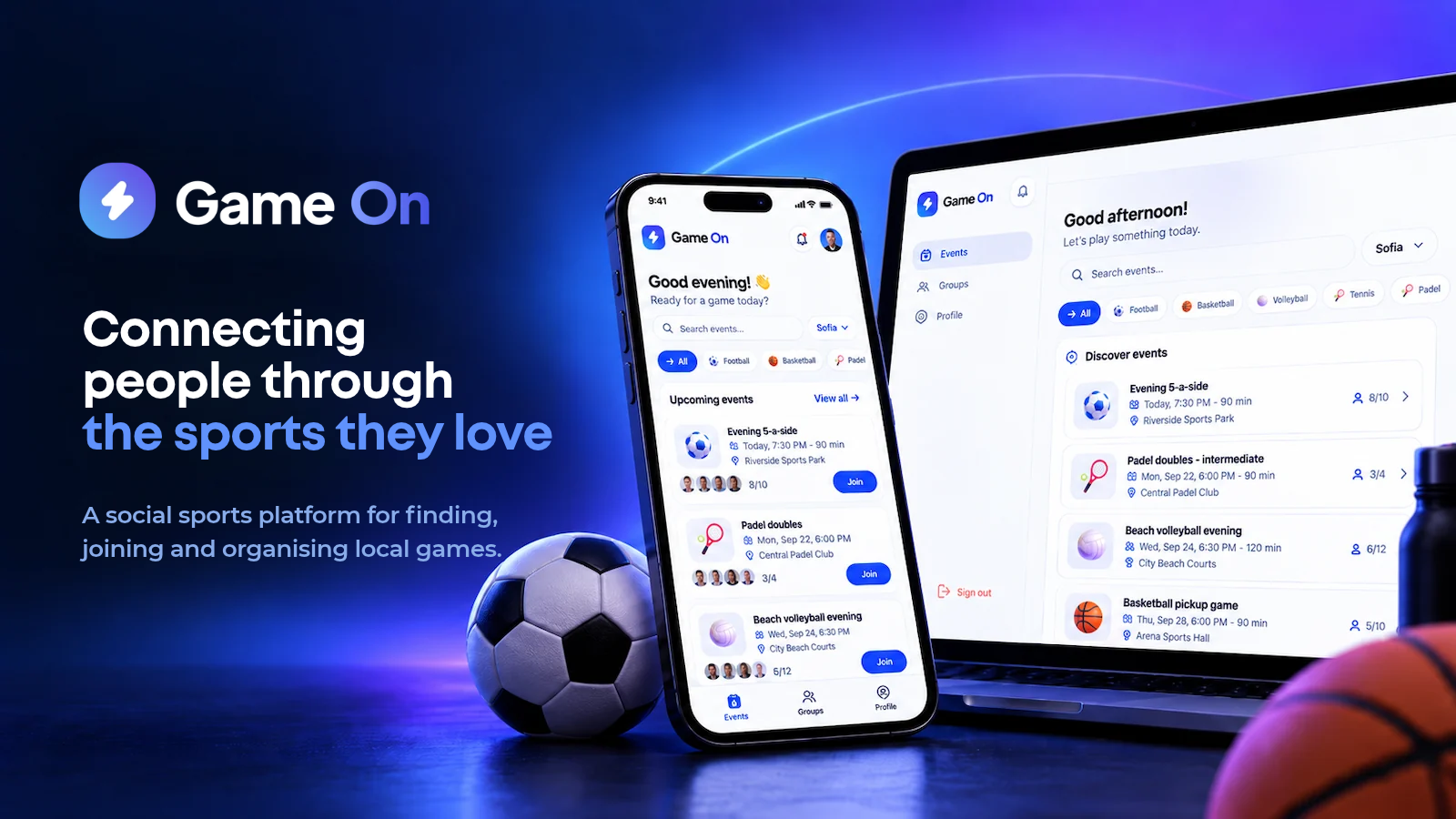
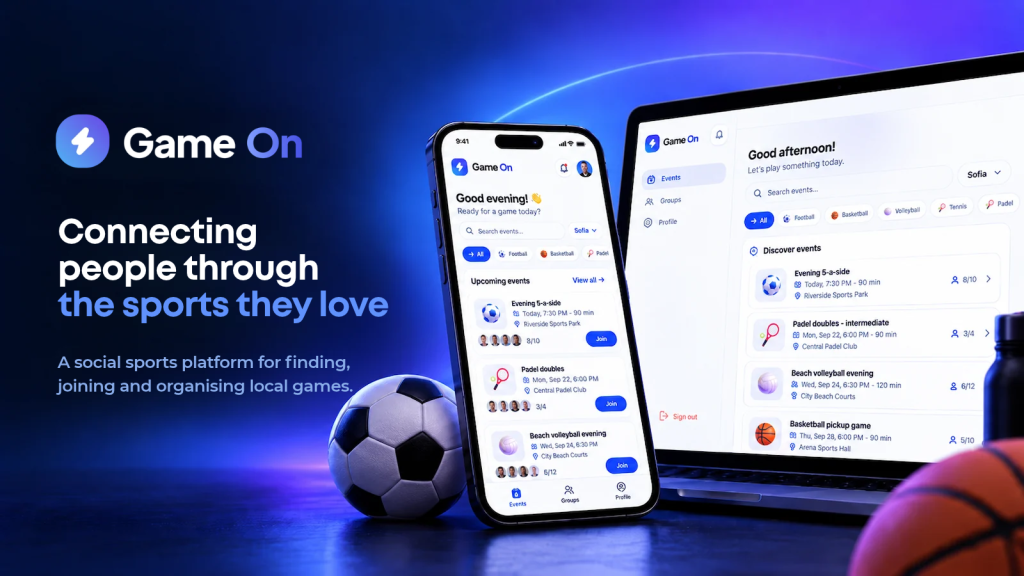
We conceived Game On as a social sports platform built around one clear idea: make it easier for people to find a game, join it, and build lasting local communities around the activities they enjoy.
Rather than starting with a broad marketplace or feature-heavy product, we focused on the smallest useful interaction:
Create an event. Discover it. Join. Play.
From that foundation, Game On evolved into a broader community platform combining local event discovery, player profiles, groups, recurring games, real-time communication, waiting lists, notifications, and community-driven venue discovery.
The product was conceived, funded, designed, engineered, and launched by EVLabs, without outside investment. From the first line of code to its App Store launch, the initial product reached the market in approximately 11 weeks.
Today, Game On is available on the web, iPhone, and Android across Europe, with continued product development after launch.
Team: Cross-functional EVLabs product team spanning product, UX/UI, web and mobile engineering, cloud infrastructure, and product operations
The challenge with amateur sports is rarely a lack of interest.
It is coordination.
People may want to play football, padel, basketball, go running, or organise another activity, but turning that intention into an actual game depends on knowing the right people at the right time.
Most amateur games begin inside established WhatsApp, Messenger, or other private groups.
That works when everyone already knows one another, but creates a barrier for anyone outside the group.
Someone who has recently moved to a city, whose friends no longer play regularly, or who simply wants to meet new people may have no obvious place to start.
Pickup games often depend on an organiser repeatedly checking availability, filling empty positions, sharing details, and handling cancellations.
The more frequently a group plays, the more repetitive that coordination becomes.
Even when enough people initially sign up, a few late cancellations can leave the organiser searching for replacements shortly before kick-off.
Traditional group chats provide little structure for handling this fairly or efficiently.
Finding one game solves the immediate problem.
The bigger opportunity is helping players meet people they enjoy playing with and making it easy to organise again.
Game On therefore needed to support more than event discovery. It needed to help turn strangers into teammates and individual games into recurring local communities.
Game On brings the full pickup-game journey into one connected experience.
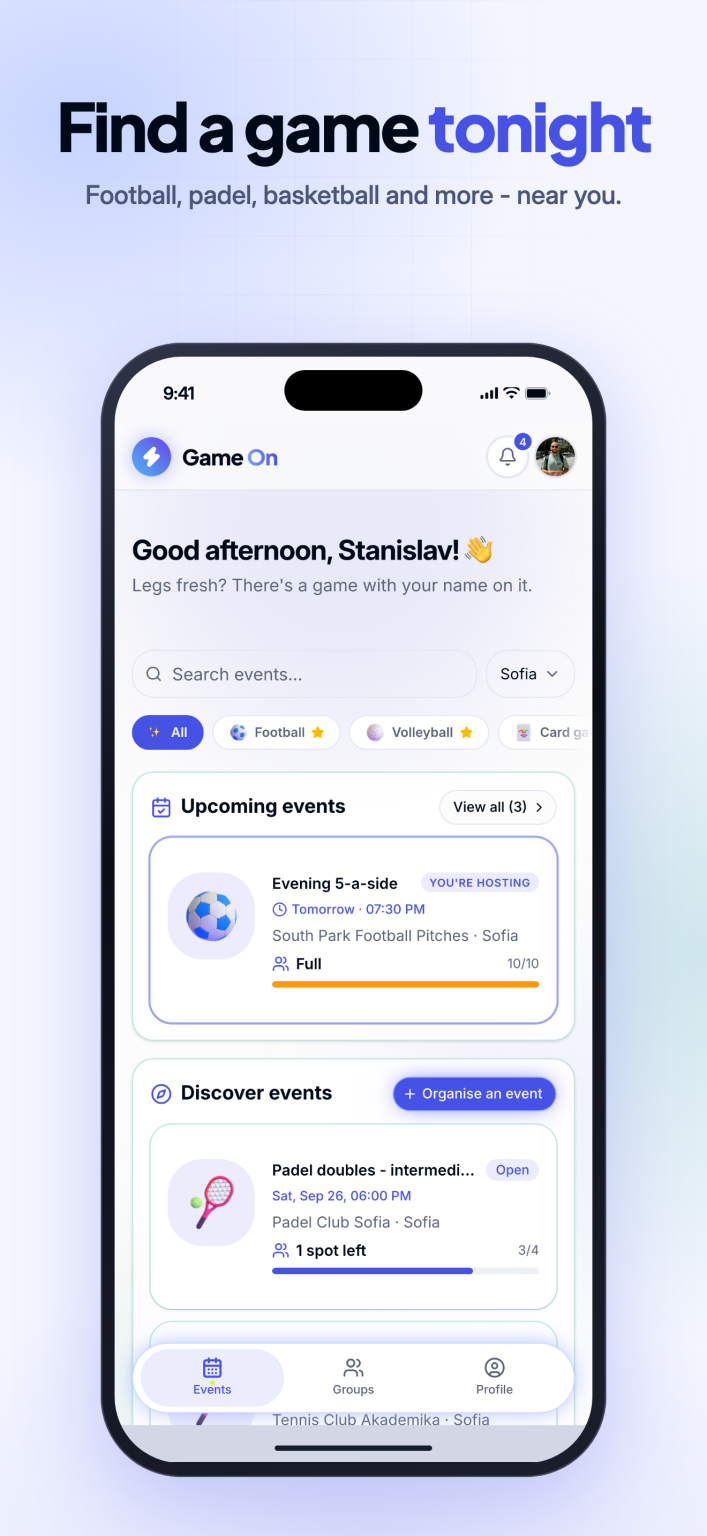
Players can discover nearby events, review the details, join with minimal friction, communicate with other participants, and receive relevant notifications.
Supported activities include football, padel, basketball, running, and social activities such as board games, with scope to support more over time.
At the centre of the experience is the event itself.
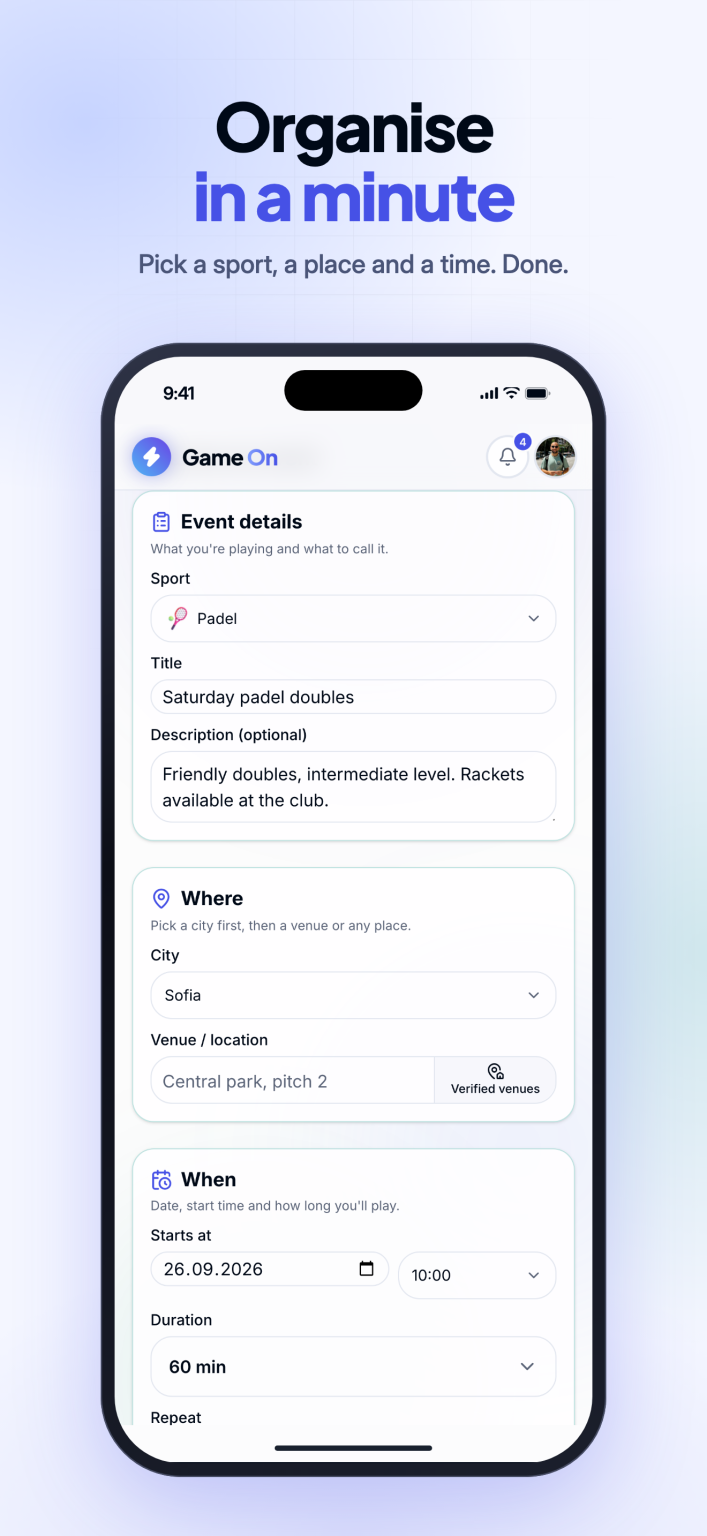
A user creates an event, others discover and join it, and everyone attending gets a shared place to coordinate.
Game On extends that experience with:
When an event becomes full, players can join a waiting list. If somebody drops out, the next person gets the opportunity to take the available place.
Together, these capabilities create a connected loop:
discover → join → communicate → play → reconnect → organise again
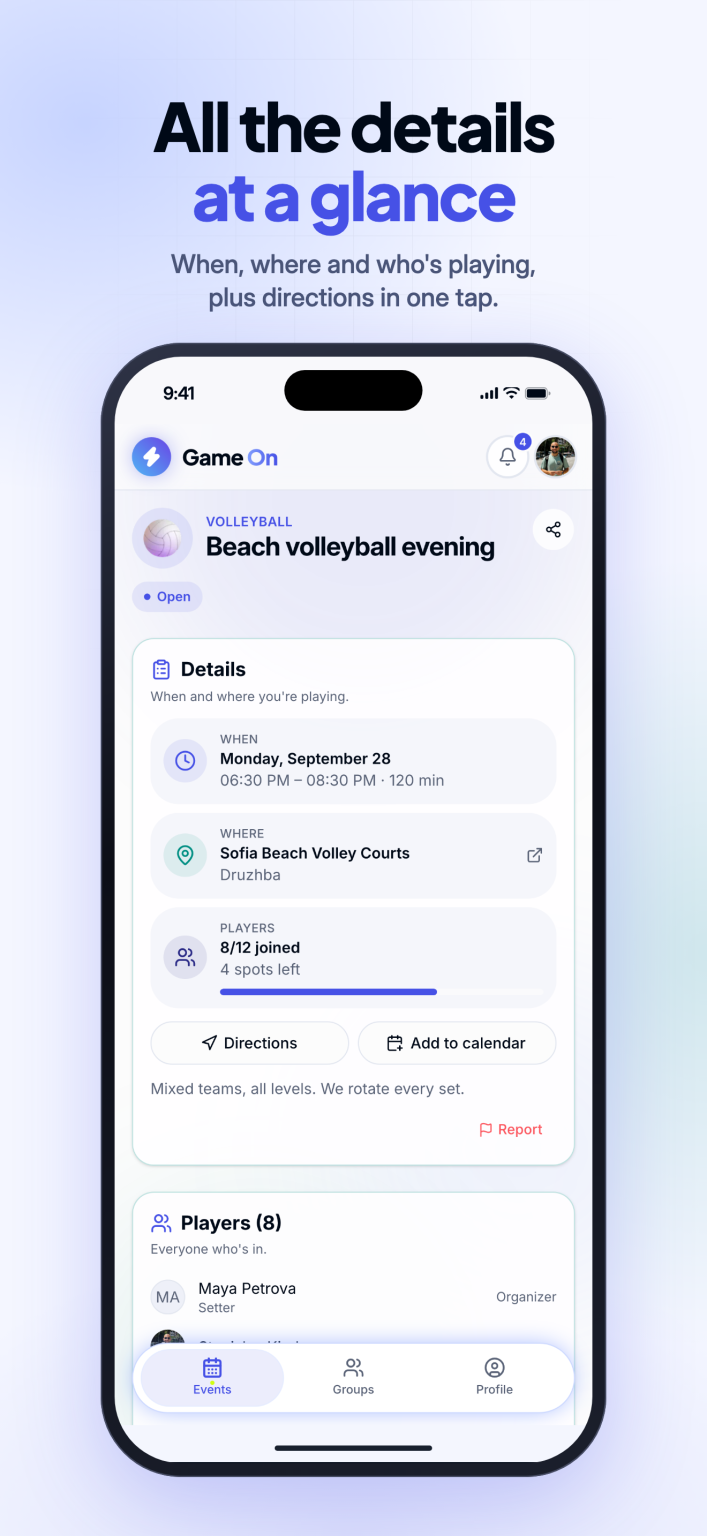
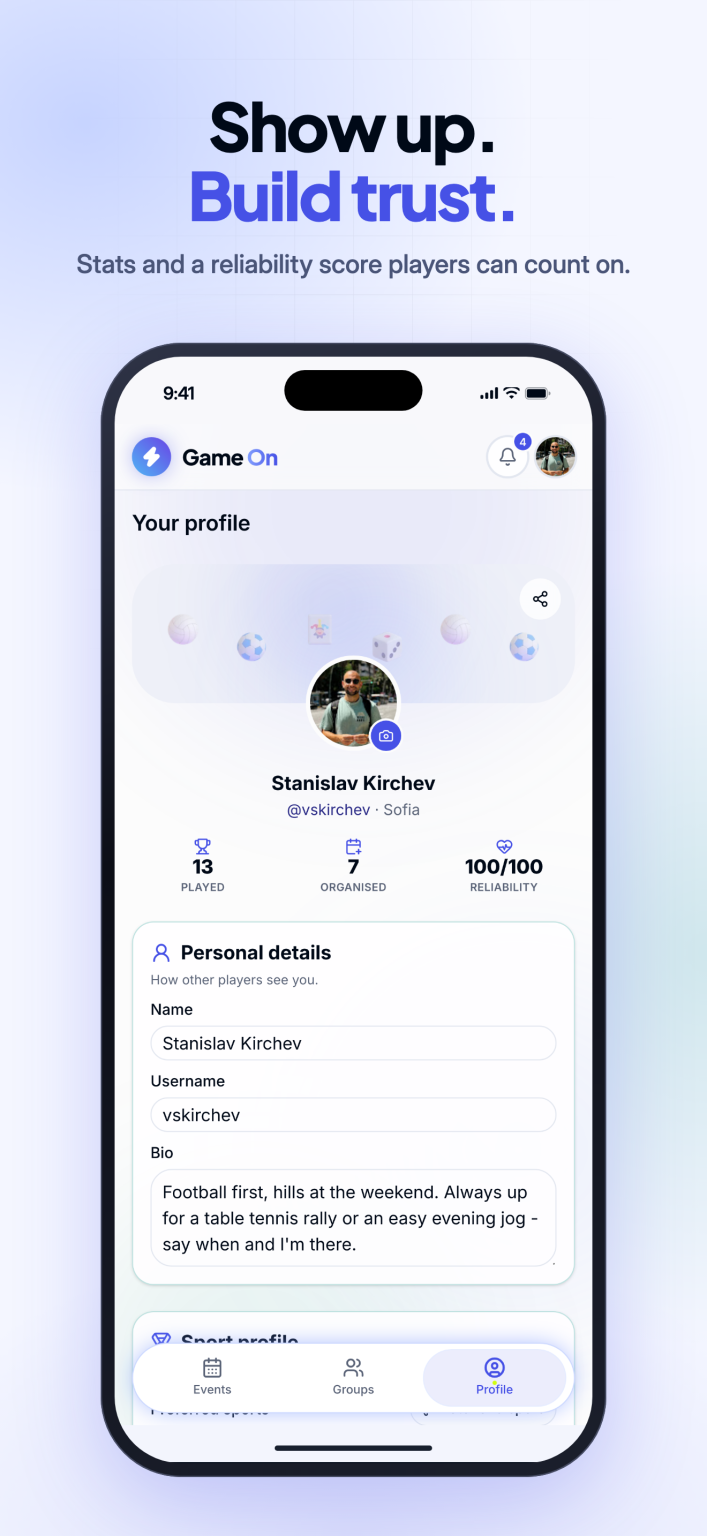
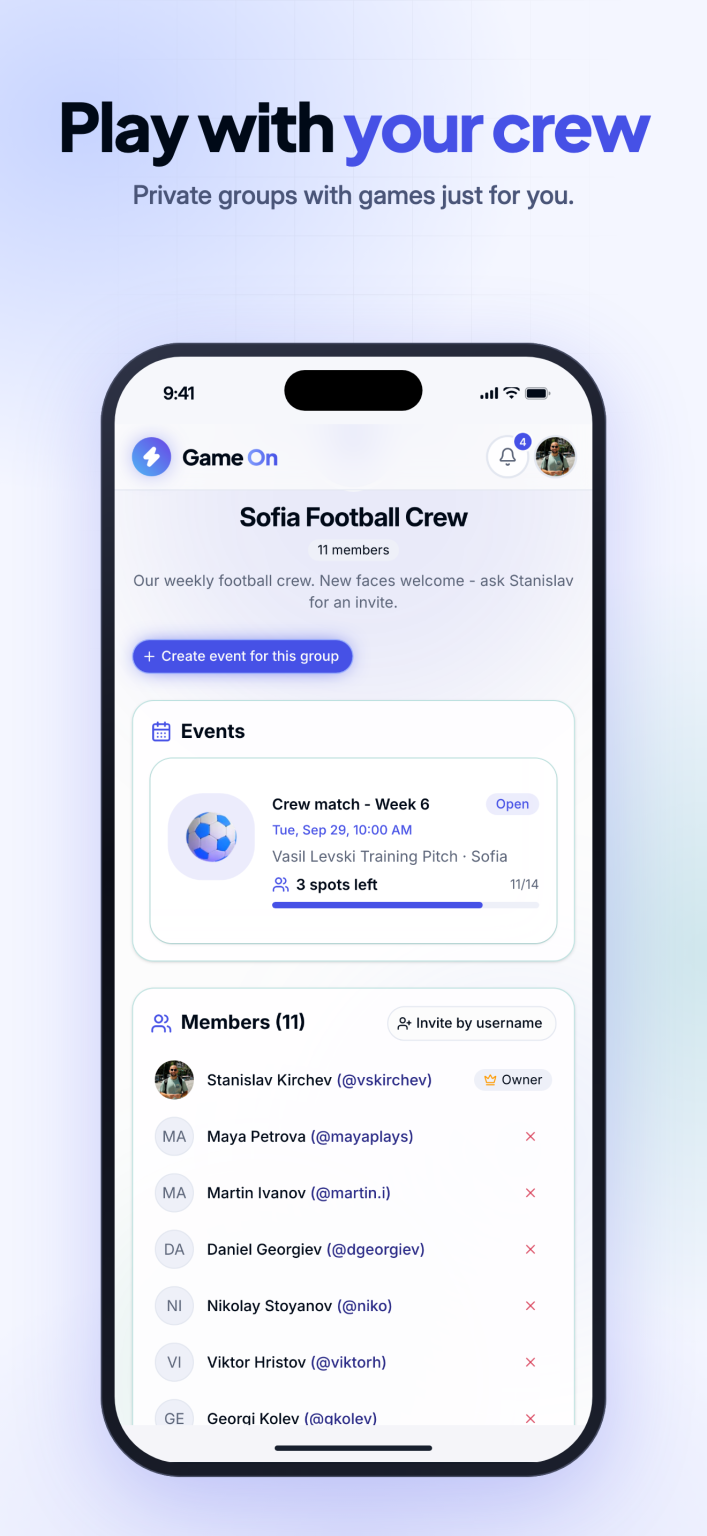
EVLabs approached Game On as a focused product rather than attempting to build an entire sports ecosystem from the start.
The first objective was to prove that the core problem could be solved simply and effectively.
The first version focused on the essential journey:
Features such as venue booking, payments, and tournaments were deliberately excluded from the initial scope.
For a fully bootstrapped product, this kept engineering effort focused on the interaction that mattered most: helping players get into real games with real people.
Game On gives users a way to discover nearby activities without relying entirely on existing friendships or closed groups.
Location-aware discovery, supported by Google Maps Platform, makes the product useful both for established players and people looking to find a new local sports community.
Late cancellations are one of the most common problems in amateur sports.
Game On addresses this with a structured waiting-list flow.
When an event reaches capacity, additional players can queue for a place. If somebody withdraws, the next person in line receives the opportunity to join.
This gives organisers a more efficient way to replace cancellations while creating a fair process for players.
Every event includes its own chat.
Using Socket.IO, players can communicate in real time around the activity they are attending.
Push notifications through Firebase Cloud Messaging and email communication through Amazon SES keep users informed when someone joins, a place becomes available, or an event is approaching.
Community products depend on trust.
Game On includes player profiles with information such as:
The reliability score provides additional context around participation and encourages players to follow through when they commit to an event.
Game On was designed not only to help people find their first game, but also to make the next one easier to organise.
Private, invite-only groups give established crews their own space, while recurring events reduce the work involved in organising regular activities such as a weekly football game.
This moves Game On beyond event discovery toward becoming a community layer for amateur sports.
Players also help shape the platform.
Users can suggest new venues and indicate which sports they would like supported, while the product team controls what is ultimately added.
The application also encourages participants to create their first event, helping turn players into organisers and strengthening the community from within.
Connecting people for real-world activities requires safeguards.
Game On includes blocking, reporting, and moderation capabilities to support a healthier community environment and give users more control over their interactions.
Building Game On required EVLabs to combine product ownership, user experience, software engineering, infrastructure, and launch execution within one internal team.
There was no external specification defining what needed to be built.
The team had to decide which problem was worth solving, what belonged in the first useful version, and how the technology should support multiple platforms without unnecessary complexity.
The starting point was deliberately simple: “I want to play tonight, but I don't know who's available.” That problem became the product filter. Anything that directly helped users create, find, or join a game belonged in the core experience. Everything else could wait.
A technically functioning application was not enough. The first version needed to support a complete real-world outcome. That meant connecting event creation, discovery, participation, communication, and notifications into an end-to-end flow that could result in people actually meeting and playing. The emphasis was on complete user journeys rather than maximum feature volume.
Once the core event flow was established, development expanded around the behaviours required to keep the platform useful beyond a single game. Chat simplified coordination. Waiting lists helped recover cancelled places. Profiles and reliability added trust. Groups and recurring events supported regular crews. Each capability strengthened the same underlying product loop rather than functioning as a disconnected feature.
A community platform cannot depend on one side creating everything for everyone else. Game On therefore encourages users not only to join activities, but also to organise them. Players can suggest venues, influence which activities are added, create events, and establish their own groups. This allows the product to become increasingly shaped by the communities using it.
As a bootstrapped product, Game On needed to reach users without requiring separate engineering teams for web, iOS, and Android. The product was therefore built around a shared cross-platform codebase. The web application uses Next.js, React, TypeScript, and TailwindCSS, while Capacitor enables the same product foundation to be packaged for native iOS and Android distribution. Game On is also available as an installable Progressive Web App. This approach allowed a small internal team to deliver the product across web, iPhone, and Android while keeping future development aligned across platforms.
A step-by-step overview of the key milestones, challenges, and progress throughout the project.
The first phase established the fundamental Game On experience around event creation, discovery, joining, and participation.
Venue booking, payments, tournaments, and other broader capabilities were intentionally excluded from the initial release.
Development then expanded into the social layer required to make Game On useful as an ongoing community product.
The team introduced:
These features were designed around the same question: what makes it easier for people to play together again?
After establishing the web experience, EVLabs brought Game On to native mobile distribution through the shared codebase.
The mobile applications include Google and Apple sign-in, push notifications, and links that can open users directly into the app.
Game On launched on the Apple App Store on 14 October 2026 and is also available through Google Play, across Europe in English and Bulgarian.
Development continues beyond the initial launch.
From an Internal Idea to a Live European Product
Next.js React TypeScript TailwindCSS
Capacitor Native iOS application Native Android application Progressive Web App
Next.js PostgreSQL Prisma
Socket.IO Firebase Cloud Messaging Amazon SES
AWS Docker Terraform Cloudflare
Bitbucket CI/CD Google Maps Platform
Game On was developed by an EVLabs in-house product team, with product ownership remaining entirely within the company.
The work brought together:
The shared technical foundation allowed the team to work across web and mobile as one product rather than treating each platform as a separate project.
Game On demonstrates a side of EVLabs that extends beyond executing predefined software requirements.
There was no external brief telling the team what to build.
We identified the problem, defined the proposition, shaped the MVP, designed the experience, developed the platform, established the infrastructure, launched across multiple channels, and continue to evolve the product after release.
The result is more than an application for organising sports events.
Game On shows how a focused everyday problem can become a complete digital product when product thinking, engineering, and community design are developed together.
Its objective remains simple: make it easier to find people, get a game going, and turn the people you meet into the crew you play with next time.